
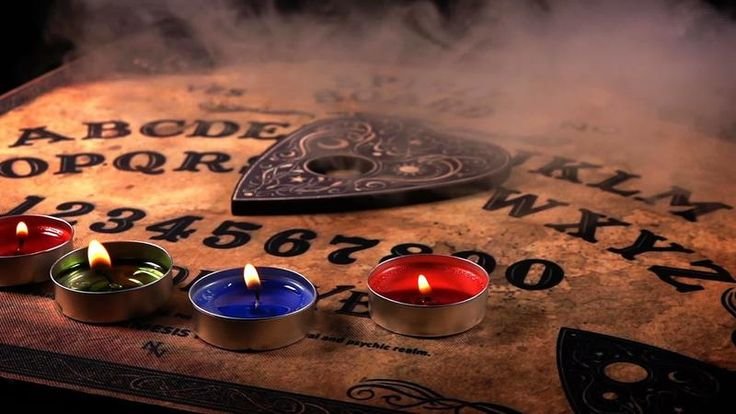
The Ouija Board: From Victorian Parlour Game to Occult Legend
Few objects in the world of the paranormal evoke as much fascination, fear, and controversy as the Ouija board.
To some, it is nothing more than a harmless board game powered by subconscious movements and imagination. To others, it is a genuine tool for spirit communication capable of opening doors to forces beyond our understanding. Regardless of where you stand on the debate, one thing is certain—the Ouija board has undergone one of the most remarkable transformations in modern history.
What many people don't realise is that the board now associated with séances, hauntings, possession stories, horror films, and occult practice did not begin its life as a sinister magical tool.
In fact, it started as a family game.
The Victorian Obsession with the Dead
To understand the origins of the Ouija board, we must first travel back to nineteenth-century America.
The Victorian era was a time of enormous social change. Scientific discoveries were transforming the world, yet at the same time there was a growing fascination with spiritualism and communication with the dead.
Death was a far more familiar part of everyday life than it is today. Disease, childbirth complications, industrial accidents, and war claimed lives with alarming frequency. Many families experienced repeated bereavement, creating a widespread desire to believe that loved ones could somehow continue to exist beyond the grave.
In 1848, two sisters from New York known as the Fox Sisters claimed to be communicating with spirits through mysterious knocking sounds. Their story ignited the Spiritualist movement, which spread rapidly throughout America and Europe.
Suddenly, séances became fashionable.
Families gathered around tables hoping to communicate with departed relatives. Mediums conducted public demonstrations. Automatic writing, spirit photography, table tipping, and other forms of alleged spirit communication became popular forms of entertainment.
The Ouija board emerged directly from this cultural obsession.
The Birth of the Talking Board
Long before the name "Ouija" existed, various forms of talking boards were already being used during séances.
Participants would place their fingers on a movable pointer which would allegedly be guided by spirits toward letters and numbers arranged on a board.
Recognising a commercial opportunity, entrepreneur Elijah Bond patented a talking board in 1890. The product was marketed as a novelty game that could answer questions about the future, reveal secrets, and provide entertainment for family gatherings.
Contrary to modern expectations, the original advertisements did not portray the board as a dangerous occult device. Instead, it was presented much like any other parlour game of the era.
Families purchased them for amusement.
Friends used them at social gatherings.
Children played with them.
The board was often found alongside card games and other forms of household entertainment.
Its creators could scarcely have imagined the reputation it would eventually acquire.
Where Did the Name "Ouija" Come From?
The origin of the name remains one of the board's most intriguing mysteries.
According to one popular story, during an early demonstration the board itself allegedly spelled out the word "Ouija" when asked what it should be called.
The participants then asked what the word meant.
The board supposedly replied:
"Good luck."
Others have suggested that the name combines the French and German words for "yes" — "oui" and "ja."
The true answer remains uncertain, adding yet another layer of mystery to the board's history.
From Toy to Spiritual Tool
As spiritualism continued to grow throughout the late nineteenth and early twentieth centuries, the Ouija board began to evolve beyond simple entertainment.
Many users genuinely believed they were communicating with deceased loved ones.
Others claimed contact with angels, spirits, historical figures, and unknown entities.
Mediums adopted talking boards as part of their practices, and the board gradually became associated with genuine attempts at spirit communication rather than simple parlour amusement.
This shift accelerated during times of tragedy.
Following World War I, millions of families were grieving lost relatives. Many turned to spiritualist practices in the hope of receiving messages from those who had died.
The Ouija board offered what appeared to be a simple and accessible method of communication with the other side.
For many people, it became much more than a game.
Hollywood Creates a Monster
Although stories of unusual Ouija experiences had circulated for decades, the board's reputation changed dramatically during the twentieth century.
Books, newspapers, and television programmes increasingly linked the board to ghostly encounters and supernatural phenomena.
Then came Hollywood.
Films depicting demonic possession, malevolent spirits, and paranormal terror transformed public perception of the board.
Suddenly, what had once sat innocently in family living rooms became associated with fear.
Movies portrayed the board as a gateway through which dark entities could enter the world of the living.
Whether these stories reflected reality or simply made effective horror entertainment, they permanently altered the board's public image.
Today, many people who have never used a Ouija board still regard it with suspicion because of its portrayal in popular culture.
The Psychology Behind the Movement
Sceptics argue that the mystery of the Ouija board can be explained through a phenomenon known as the ideomotor effect.
This theory suggests that participants unconsciously move the planchette without realising they are doing so.
Tiny muscle movements combine to create the impression that an external force is guiding the pointer.
Numerous scientific experiments have demonstrated that people can influence the movement of the planchette without conscious awareness.
For many researchers, this explanation solves the mystery entirely.
Yet believers remain unconvinced.
They point to sessions in which information was allegedly revealed that no participant could have known, as well as countless reports of strange experiences occurring before, during, or after use of the board.
The debate continues to this day.
The Ouija Board and Modern Occult Practice
Within contemporary occult and magical traditions, attitudes toward the Ouija board vary considerably.
Some practitioners regard it as a legitimate divination tool capable of facilitating communication with spirits.
Others avoid it entirely, believing it attracts unpredictable energies or encourages inexperienced users to engage with forces they do not fully understand.
Many ceremonial magicians and experienced occult practitioners dismiss the board as unreliable, preferring more structured methods of spirit communication.
Nevertheless, the Ouija board remains one of the most recognised occult objects in the world.
Its simple design has become an enduring symbol of mystery, spirit communication, and humanity's endless fascination with the unknown.
A Board Suspended Between Worlds
More than 130 years after its invention, the Ouija board continues to occupy a unique place in popular culture.
It exists at the crossroads of history, folklore, psychology, religion, entertainment, and the paranormal.
Was it merely a clever Victorian parlour game that evolved into a supernatural legend?
Is it a psychological phenomenon misunderstood by generations of users?
Or does it genuinely provide a channel through which something beyond ourselves can communicate?
The answer depends largely upon who you ask.
What cannot be denied is that few objects have travelled such a strange path through history. Born as a family amusement, adopted by spiritualists, embraced by occultists, feared by religious groups, and immortalised by horror cinema, the Ouija board remains one of the most intriguing artefacts ever to emerge from humanity's enduring desire to speak with the dead.
Whether viewed as a toy, a tool, or a doorway, its story is far from over.
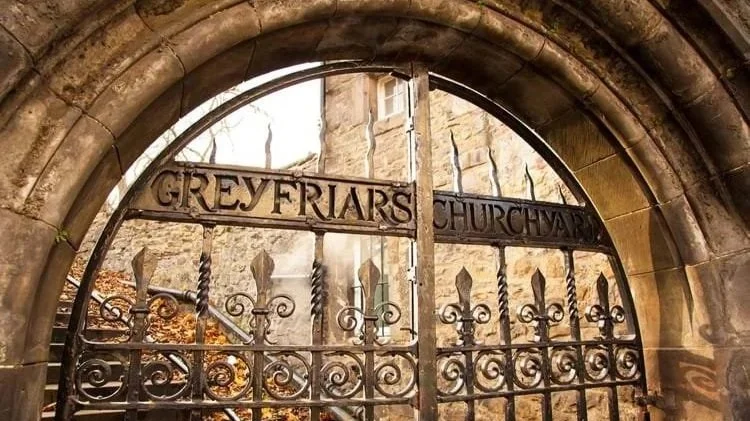
Greyfriars Kirkyard: Edinburgh's City of the Dead
There are graveyards, and then there is Greyfriars Kirkyard.
Hidden within the heart of Edinburgh's Old Town lies a place where history, death, folklore, and the supernatural converge in a way few locations on Earth can rival. For centuries, Greyfriars Kirkyard has been a place of burial, suffering, execution, body snatching, religious persecution, and alleged paranormal activity. Its dark reputation has attracted everyone from ghost hunters and occult enthusiasts to historians and curious tourists seeking a glimpse into one of Britain's most infamous haunted locations.
Having visited Greyfriars Kirkyard on numerous occasions and taken part in paranormal investigations within its ancient grounds, I can personally attest to the unique atmosphere that hangs over the cemetery. Whether one believes in ghosts or not, there is an undeniable sense that this is a place where the weight of history refuses to rest quietly.
A Graveyard Built Upon Suffering
Greyfriars Kirkyard dates back to the sixteenth century and contains the remains of thousands of Edinburgh residents. Yet it is not merely a cemetery. It is a monument to centuries of death, disease, violence, and political oppression.
Among the darkest chapters in its history is the story of the Covenanters. Following their defeat at the Battle of Bothwell Bridge in 1679, approximately 1,200 Covenanter prisoners were confined in an open-air section of the kirkyard now known as the Covenanters' Prison. Exposed to Scotland's brutal weather, many died from starvation, disease, and neglect. The prison remains one of the most chilling locations within the cemetery today.
The suffering endured within those walls helped establish Greyfriars' reputation as a place stained by tragedy long before ghost stories began to circulate.
Bloody George Mackenzie
No figure is more closely associated with Greyfriars than Sir George Mackenzie.
History remembers him as a brilliant lawyer and Lord Advocate of Scotland. His critics remember him by another name: Bloody Mackenzie.
Mackenzie was instrumental in the persecution of the Covenanters and became notorious for the harsh treatment inflicted upon religious dissidents during the reign of Charles II. To many Scots, he became the embodiment of cruelty and oppression.
Following his death in 1691, Mackenzie was interred within an imposing black mausoleum in Greyfriars Kirkyard. It would later become one of the most feared tombs in Britain.
Today, the Black Mausoleum stands as an ominous monument overlooking the Covenanters' Prison, linking victim and persecutor in death as they were in life.
Resurrection Men, Burke and Hare, and the Trade in Corpses
To understand Greyfriars fully, one must appreciate the gruesome reality of nineteenth-century Edinburgh.
The city's medical schools required a steady supply of cadavers for anatomical study. Demand far exceeded the legal supply, leading to the rise of grave robbers known as "resurrection men."
Protective iron cages known as mortsafes were installed in graveyards to prevent freshly buried bodies from being stolen. Greyfriars still contains examples of these grim devices.
Although the infamous murderers William Burke and William Hare were not known to rob Greyfriars specifically, their crimes were part of the same macabre world. Rather than digging up corpses, Burke and Hare simply created their own supply by murdering vulnerable victims and selling the bodies to anatomists. Their story forms part of the wider dark history that surrounds Edinburgh's relationship with death and dissection.
Walking among the ancient tombs of Greyfriars, it is impossible not to imagine the fear families once felt knowing that freshly buried loved ones might not remain undisturbed for long.
Frankenstein, Mary Shelley and the Birth of Gothic Horror
Greyfriars' influence extends beyond history and into literature.
Many researchers and local historians have suggested that Edinburgh's atmosphere of grave robbing, anatomical experimentation, and fascination with death helped shape the Gothic imagination of the early nineteenth century.
The story of Burke and Hare, the city's thriving dissection trade, and Edinburgh's obsession with anatomy all echo themes found within Mary Shelley's masterpiece, Frankenstein.
While direct links remain debated, it is difficult to ignore the parallels between Shelley's tale of reanimated corpses and the real-life horrors unfolding in Edinburgh during the same period.
Few cities have blurred the boundary between science, death, and horror quite so effectively as Edinburgh.
The Harry Potter Connection
Greyfriars is also famous for inspiring elements of the Harry Potter series.
Visitors frequently seek out the grave of Thomas Riddell, whose surname bears an obvious resemblance to Lord Voldemort's real name, Tom Riddle. Nearby graves contain names that many believe influenced other characters within the series.
The nearby George Heriot's School, visible from the kirkyard, is also often cited as one of the inspirations for Hogwarts School of Witchcraft and Wizardry.
Whether intentional or coincidence, Greyfriars has become a pilgrimage site for both horror enthusiasts and Harry Potter fans alike.
The Mackenzie Poltergeist
If Greyfriars is famous for anything today, it is the legend of the Mackenzie Poltergeist.
The story exploded during the late twentieth century after reports emerged of visitors experiencing scratches, bruises, burns, nausea, dizziness, blackouts, and overwhelming feelings of terror while visiting the Black Mausoleum and the surrounding area. Accounts of unexplained knocks, apparitions, strange mists, and shadow figures became increasingly common.
Believers claim the activity began after the mausoleum was disturbed by intruders. Others suggest the spirit may not be Mackenzie himself but something darker attracted by centuries of suffering and death.
Regardless of the explanation, Greyfriars has developed a worldwide reputation among paranormal investigators and is frequently listed among Britain's most haunted locations.
Reverend Colin Grant and the Failed Exorcism
One of the most controversial chapters in the Greyfriars story involves Reverend Colin Grant.
Grant became involved in attempts to confront and remove the alleged supernatural presence associated with the Mackenzie Poltergeist. According to paranormal accounts, he conducted prayers and spiritual interventions intended to calm or banish the entity.
Believers point to the fact that Grant later died unexpectedly as evidence that he suffered consequences for his involvement. Skeptics, of course, reject any paranormal connection and view such claims as folklore rather than fact.
Whatever one's beliefs, the story has become firmly embedded within Greyfriars legend and is often retold alongside accounts of the poltergeist itself.
A Truly Haunted Destination?
Is Greyfriars genuinely haunted?
The answer depends entirely upon who you ask.
Skeptics point to psychology, suggestion, historical atmosphere, and the power of expectation. Believers point to decades of eyewitness testimony, unexplained injuries, strange occurrences, and the sheer number of reports associated with the site. Some paranormal enthusiasts claim hundreds of experiences have been documented over the years.
What cannot be denied is that Greyfriars possesses an atmosphere unlike almost anywhere else in Britain.
Having explored its pathways on numerous occasions and participated in paranormal investigations there, I have always found it to be a location that leaves a lasting impression. The combination of genuine historical tragedy, centuries-old tombs, tales of persecution, grave robbing, ghost stories, and Gothic architecture creates an environment that feels suspended between history and legend.
Whether you arrive as a historian, a paranormal investigator, a Harry Potter fan, or simply someone fascinated by the darker side of human history, Greyfriars Kirkyard offers an unforgettable experience.
In a city already renowned for ghosts and legends, Greyfriars remains the undisputed king of Edinburgh's haunted locations—a place where the dead have never quite stopped telling their stories.
The Journey Behind Noctis Occult
For as long as I can remember, I have been fascinated by the occult, the paranormal, folklore, symbolism, and the mysteries that exist beyond the boundaries of ordinary life. While others were content with simple explanations, I always found myself asking questions about the unknown and seeking to understand the strange experiences, beliefs, and traditions that have captivated humanity throughout history.
What began as curiosity in my youth eventually became a lifelong passion. Over the years, I immersed myself in the study of paranormal phenomena, occult traditions, folklore, mythology, and spiritual practices from across the world. This fascination led me on a personal journey that would shape much of my life and ultimately inspire the creation of Noctis Occult.
Throughout the years, I have taken part in paranormal investigations across the United Kingdom, visiting reputedly haunted locations, researching local legends, and exploring reports of unexplained activity. These experiences have introduced me to some remarkable places, fascinating individuals, and stories that continue to challenge our understanding of the world around us.
My path also led me into the practice of witchcraft and ritual work. Through years of study and personal experience, I developed a deep appreciation for the symbolism, history, and spiritual significance found within magical traditions. Along this journey, I have worked with individuals and businesses seeking ritual cleansing and banishing work to help remove unwanted or negative energies from homes, workplaces, and other environments. Whether viewed as spiritual practice, symbolic ritual, or personal empowerment, I have always believed that ritual can play a meaningful role in helping people reclaim their spaces and create positive change.
Noctis Occult was born from these experiences.
It is more than simply an online store. It is the culmination of decades of fascination with the unusual, the mysterious, and the alternative. It is a place where gothic culture, occult symbolism, folklore, paranormal history, and creative self-expression come together.
My goal is for Noctis Occult to become a brand that proudly represents the alternative, the quirky, and the unconventional. A brand for those who are drawn to the darker aesthetics, unusual curiosities, ancient symbols, and traditions that exist outside of the mainstream. A brand that celebrates individuality and encourages people to embrace the things that make them unique.
Many of the designs featured within Noctis Occult are inspired by historical symbolism, occult imagery, folklore, and the rich traditions that have fascinated me throughout my life. Symbols have always played an important role in human history, carrying meanings that transcend language and connect us to our ancestors, beliefs, and personal identities. Through apparel, gifts, artwork, and curiosities, I hope to share some of that fascination with others.
Alongside the store, this blog will serve as a place to document and explore some of the most compelling paranormal, occult, and unexplained cases in history. From famous hauntings and mysterious disappearances to tales of witchcraft, occult societies, folklore, cryptids, and supernatural encounters, I will be examining the stories that continue to intrigue and inspire generations of researchers and enthusiasts.
My aim is to create a resource that informs, entertains, and encourages open-minded discussion. Some stories may have logical explanations. Others may remain unsolved. Regardless of where the truth lies, the mystery itself often tells us something fascinating about human belief, culture, and our enduring desire to understand the unknown.